How Social Media Algorithms Are Shaping Your Thinking
Mar 22, 2026
|
10
min read
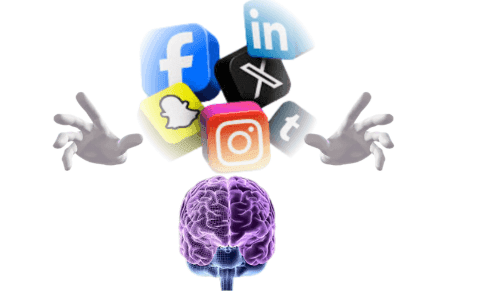
Every generation gets criticized by the one before it. But there's something different about the criticism Gen Z faces. It's not really about the generation itself , it's about what we've been given. Our phones and the algorithms running our favorite apps have created something older generations never had to navigate: not physical hardship, but psychological echo chambers that are making us more divided and less capable of genuine thought.
The Moment I Noticed It
I first noticed it when my phone died in class. We had free time after our final, and my friend let me scroll his TikTok for a while. My own feed was usually full of study tip videos, memes, and random trivia. His was almost entirely political , heated, onesided, constant. It made sense in a weird way, because my friend had always been a little aggressive when it came to political discussions, even though he never seemed to have deeply thought out positions. He just always had something to say. And the more time passed, the more he seemed to get triggered by anything: politics, adjacent , school policies, lunch choices, whatever.
How Algorithms Actually Work
My friend isn't alone. What I saw on his phone is happening to millions of people every day, and it's not accidental , it's engineered. These platforms are designed to learn from your behavior: what you like, how long you watch something, what you share. That data builds a personal bubble meant to keep you on the app longer. But it also creates an echo chamber, where you're only ever fed content that reinforces ideas you already agree with. Instead of encountering different perspectives or being genuinely challenged, your entire information environment becomes a reflection of yourself.
The Real,World Consequences
The consequence of a deeply divided information diet is a deeply divided ability to communicate. This is clearest in politics, where you can often look at someone's algorithm and immediately understand why they sound the way they do. People on extreme ends of any spectrum end up blaming each other constantly and never reaching any kind of shared understanding. But it doesn't stay online. It spills into real-life conversations , family dinners, classrooms, friend groups , where as soon as a difficult topic comes up, the room turns into a battlefield.
The Real Danger
When was the last time you were on TikTok or Instagram or X and saw something that genuinely made you think, 'I never considered that before'? For most people, that almost never happens. These apps are designed to feed you what you're already comfortable with , or to provoke you with controversy , but never to actually challenge what you believe. And that's the real danger. People stop evolving. Their views calcify. They become more confident and less curious at the same time.
Five Things You Can Actually Do
So what's the answer , delete everything and live in the woods? No. These apps aren't going to change; they're built to maximize time,onscreen. But that doesn't mean you're powerless.
1. Audit Your Feed
Create a new TikTok account and watch the general FYP for a while. Compare it to your own. Ask yourself: why are those different? Or once a week, scroll through your feed like a stranger would , look at it objectively and ask if the content is actually true, or if it's just designed to keep you engaged.
2. Expose Yourself to the Other Side
Instead of only watching content that confirms what you already think, intentionally find one video or article that represents the opposing view and try to find at least one valid point in it. This isn't about changing your mind , it's about keeping it open.
3. Prioritize Real Connections
Don't spend your days talking to strangers or AI bots online. Focus on building real relationships with real people , people who think differently than you do, and people who share your values in meaningful ways.
4. Research Your Own Views
If you hold a belief strongly, take the time to verify it independently. Don't let an algorithm be the only thing that shaped your opinion.
5. Be Uncomfortable on Purpose
This is the most important one. Put yourself in situations where you might be wrong, where someone challenges you, where you don't already have the answer. That discomfort is where growth happens.
The bottom line is to scroll with consciousness. What you see online is being shown to you for a reason , usually to keep you there longer. The sharpest people aren't the ones who read the most. They're the ones who constantly question what they already know, pursue conversations in search of truth, and aren't afraid to sit in discomfort. Put the phone down. Engage with ideas that challenge you. Your future self will be sharper, more empathetic, and harder to manipulate for it.