Why School Makes You Memorize “Useless” Facts (And Why It Matters)
|
7
min read
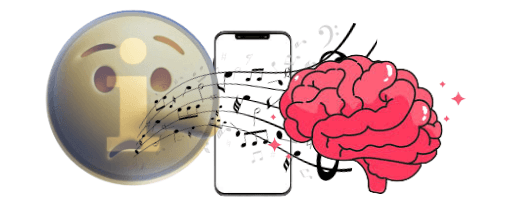
The Magna Carta , you changed history and shaped the British legal system. You also have zero immediate effect on my life whether I remember or forget the exact date you were signed. And yet, there I was, preparing for a test like it was a game show, scrambling to remember trivial facts about events from centuries ago. Plus, why even memorize anything anymore? I can talk into my phone and get any answer faster than I can write it down. So what's the point of school , and 'learning' , if its main goal is just stuffing you with information?
What Google Actually Gives You
Let's be honest about what a search engine returns:
The Pythagorean Theorem: a² + b² = c². Google gives you the formula, a diagram, and a video explanation in under three seconds.
The year World War II began: 1939. Google tells you instantly, with sources.
So why memorize it? If you're not pursuing that subject, why does it matter what exact day WWII started? Maybe facts aren't what school is really trying to teach you. Maybe facts are the speaker , not the message.
The Real Reason You're Memorizing Facts
The facts you're forced to memorize aren't necessarily the point themselves , they're the training equipment. Think of it like the gym. Most people don't curl a dumbbell to get better at curling dumbbells. They do it to build muscle so they can handle more. Schools work the same way: those 'useless facts' are the weight used to train your brain to develop skills that a Google search can't give you.
What You're Actually Building
Critical thinking , 'Proving triangles' isn't really about triangles. It's about practicing logic, learning to persist through a problem, and building the ability to reason.
Performance under pressure , Every tense test environment conditions your nervous system to not fall apart when stakes are high. That skill transfers everywhere.
Pattern recognition , When you spend time in math class solving for x, you start spotting patterns and building mental shortcuts that apply beyond math class.
Curiosity , School exposes you to topics you'd never Google on your own. That breadth builds a fuller picture of the world.
The Real Problem With How It's Taught
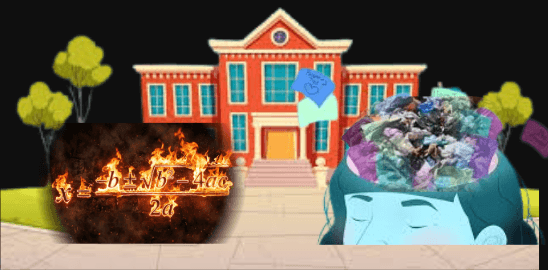
The issue isn't necessarily what you're being taught , it's that nobody tells you why. Most of the time you're handed a worksheet with the quadratic formula and just expected to use it. Nobody explains that engineers use this to design bridges and structural systems. That gap is what makes topics feel arbitrary. And it's a legitimate failure of the school system , not just in teaching subjects most people won't use, but in failing to connect those subjects to any meaningful context.
How to Work With the System
Rather than focusing on how useful the fact itself is, try shifting the question. Ask: 'What skill am I building by learning this?' or 'How does this help me recognize patterns later?' or 'Who actually uses this, and why?' Not everything will have a satisfying answer , sometimes you really are just forced to learn random trivia. But most of the time, you're subconsciously building cognitive skills that carry real value in the world outside school.
You lift weights designed to make you stronger. They don't teach you exactly how to move furniture , but they build the strength to do it more easily when you need to. A Google search gives you the trivia answer in two seconds. It can't give you the pattern recognition, problemsolving, or public speaking skills you've been quietly building the whole time.